
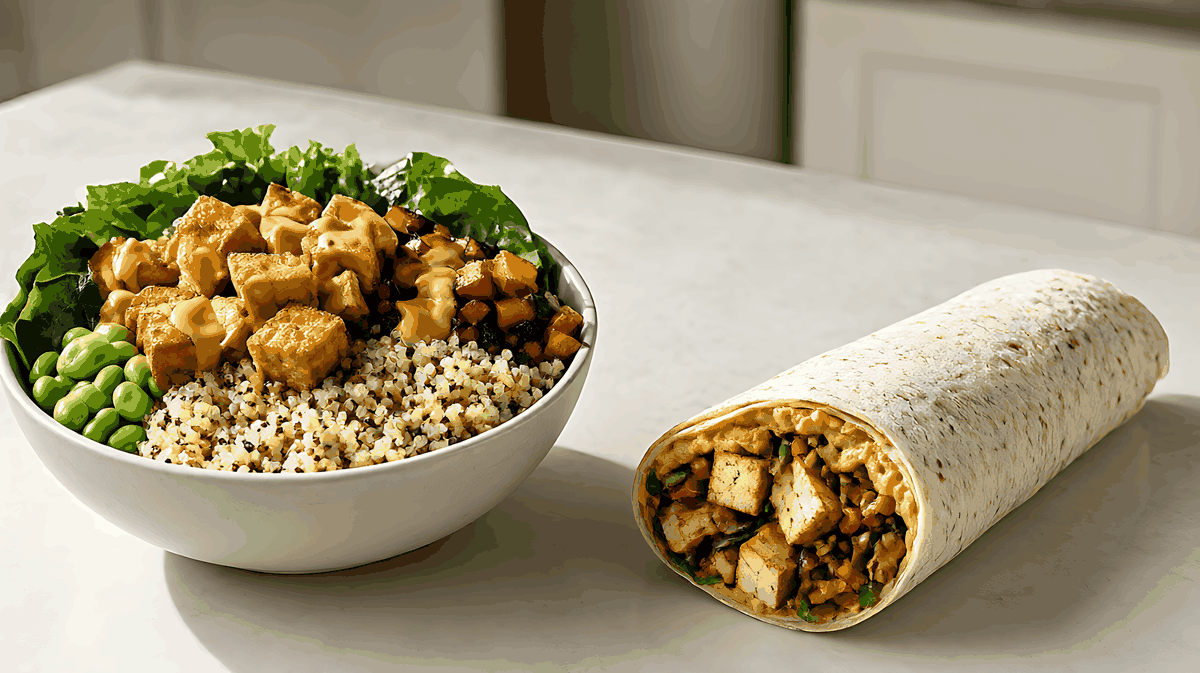
Summary: A filling vegan bowl can bring together plant protein, fiber-rich carbohydrates, vegetables, and a flavorful sauce without relying on one “perfect” ingredient. This guide turns the idea of muscle-preserving high-protein bowls for vegans into a practical meal-building method, with mix-and-match portions, four recipes, prep steps, and realistic nutrition and safety notes. Pair food planning with appropriate strength activity and individualized clinical guidance when needed; no single bowl can guarantee muscle retention.
When these bowls are useful
A bowl is a flexible format rather than a prescribed diet. It can work for someone who wants a satisfying lunch, a repeatable meal-prep option, or a plant-based way to make protein more visible at meals. The same structure can be adjusted for different appetites, budgets, cooking skills, and food preferences.
These ideas may be especially helpful when meals feel disorganized: choose a protein anchor, add a grain or starchy vegetable, include produce, and finish with a sauce or crunchy topping. If appetite is low, a smaller bowl may be more comfortable; if you need a larger meal, increase the components that suit you. People using GLP-1 medicines may experience appetite or digestive changes, but responses vary. This article does not replace advice from the prescribing clinician or a registered dietitian.
“Muscle preserving” describes the goal of supporting adequate nourishment and strength—not a promise that a particular recipe prevents muscle loss. Body composition is influenced by total intake, health status, activity, sleep, age, and many other factors. For an older adult or anyone with a relevant medical condition, a personalized plan is preferable to copying generic serving targets.
The bowl formula: four parts, one flexible meal
1. Start with a protein anchor
Use a food that contributes meaningful protein and that you enjoy eating: tofu, tempeh, edamame, lentils, chickpeas, beans, seitan, or a soy-based yogurt sauce. Combining a legume with tofu or edamame is an easy way to make protein a clear part of the bowl. If using seitan, remember it contains wheat gluten and is not suitable for people who need to avoid gluten. Check labels on packaged foods because sodium and protein content can vary widely.
You do not need to combine particular plant proteins in the same mouthful to make a meal useful. Variety across the day and week—beans, soy foods, grains, nuts, and seeds—can help broaden the nutrient mix. If you have been given a protein target because of training, aging, illness, or medication-related weight changes, ask a clinician or dietitian to help set an appropriate amount. Requirements can differ, including for people with kidney disease or other conditions.
2. Add a satisfying carbohydrate
Quinoa, brown rice, barley, farro, buckwheat, potatoes, and whole-grain wraps can add energy, texture, and staying power. Choose based on taste and tolerance rather than treating any grain as mandatory. A smaller portion can be appropriate when appetite is limited; a larger one may fit a more active day. Whole grains and legumes also contribute fiber, which is useful for many people but may need to be increased gradually if you are not used to it.
3. Make vegetables easy to eat
Mix raw and cooked produce for contrasting textures: leafy greens, cucumber, peppers, shredded cabbage, carrots, broccoli, zucchini, mushrooms, or roasted squash. Frozen vegetables are a practical option and can reduce prep time. If raw or very high-fiber vegetables feel uncomfortable, try cooked, peeled, or smaller portions. More volume is not automatically better; comfort and adequate overall intake matter.
4. Finish with flavor, not a nutrition contest
A lemon-tahini drizzle, salsa, miso-ginger dressing, herbs, pickled vegetables, toasted seeds, or a spoonful of hummus can make a bowl appealing. Oils, tahini, nuts, and seeds are energy-dense, so a small amount can add plenty of flavor. You can also use broth, citrus, vinegar, spices, or blended beans for a lighter sauce. The best choice is one you will actually use.
Four high-protein vegan bowl ideas
The following are templates, not laboratory-tested nutrition labels. Protein, calories, sodium, and fiber depend on the brands, quantities, cooking method, and substitutions used. If exact values matter for a clinical plan, calculate them from the products and amounts you actually prepare.
1. Tofu-edamame quinoa bowl
Combine cooked quinoa with baked or pan-seared extra-firm tofu, shelled edamame, shredded cabbage, cucumber, and scallions. Toss the tofu with garlic, smoked paprika, and a little low-sodium soy sauce or tamari before cooking. Dress with lemon juice, a modest spoonful of tahini, and water to thin. Add sesame seeds if desired.
Why it works: Tofu and edamame make soy protein central rather than incidental, while quinoa, vegetables, and cabbage provide different textures. For quicker preparation, use microwaveable quinoa and frozen edamame. For a gentler version, use cooked cabbage and warm vegetables instead of a large raw salad. If soy is an allergen, swap in lentils or chickpeas and use a non-soy dressing.
2. Smoky lentil and sweet-potato bowl
Layer cooked green or brown lentils over roasted sweet potato with baby spinach, chopped tomato, and red onion. Season the lentils with cumin, smoked paprika, black pepper, and lemon. A spoonful of hummus can serve as a creamy sauce; thin it with water and lemon if needed. Add parsley or cilantro for freshness.
Make it your own: Use canned lentils, rinsed and drained, to shorten cooking time. If the fiber load feels too high, use a smaller lentil portion and add tofu or a lower-fiber grain. Roast a tray of sweet potato once and use it in several meals. The goal is a reliable combination, not a rigid recipe.
3. Tempeh and barley crunch bowl
Serve sliced tempeh over barley with roasted broccoli, shredded carrots, and a few thin slices of radish. Marinate the tempeh briefly in ginger, lime, and a small amount of tamari, then bake or brown it. Stir lime juice into unsweetened plant yogurt or tahini for a quick sauce. If barley is unavailable, brown rice or buckwheat works.
Alternative: Tempeh has a firm texture and a distinct flavor that is not for everyone. Substitute baked tofu, edamame, or beans. Barley contains gluten, so choose rice, quinoa, or certified gluten-free oats or grains if you need to avoid it.
4. Chickpea, seitan, and whole-grain wrap bowl
For a bowl inspired by a wrap, combine chickpeas and seitan strips with lettuce, tomato, cucumber, and a chopped whole-grain wrap or pita on the side. Season with oregano, garlic, black pepper, and lemon. Use hummus or a lemon-herb bean dip as the dressing. This gives you the flavor of a stuffed wrap with components that can be portioned separately.
Important swap: Seitan is wheat-based. If gluten is not suitable, replace it with tofu, edamame, or an additional serving of chickpeas. If chickpeas feel too filling, reduce their amount and use another protein you tolerate. A vegan meal does not have to include every plant-protein category at once.
How to meal-prep without making bowls soggy
- Pick two anchors. Choose one protein such as tofu or lentils and one carbohydrate such as quinoa or potatoes. Preparing just two components is often easier than making several complete meals.
- Cook safely and cool promptly. Follow package directions, keep raw and ready-to-eat foods separate, and refrigerate cooked food promptly in shallow containers. Use leftovers within a safe time for your refrigerator and local food-safety guidance; freeze portions you will not eat soon.
- Keep wet and crisp items apart. Store dressing, greens, cucumber, and crunchy toppings separately. Assemble shortly before eating. If you prefer warm meals, pack cooked vegetables and grains together and add fresh greens after reheating.
- Make one sauce that can change character. A lemon-tahini base can become smoky with paprika, herb-forward with parsley, or spicy with chili. Keep a second option such as salsa or hummus for variety.
- Use portions as a starting point, not a rule. Pack smaller containers if large meals are unappealing, or add another grain or protein portion when you want more. Hunger, fullness, activity, and medical needs can change from day to day.
For a very busy schedule, assemble a no-cook version with canned beans, microwaveable grains, pre-washed greens, frozen edamame, and a prepared dressing. Rinse canned beans if you want to reduce some surface sodium. Convenience foods can be part of a nutritious routine; inspect labels for allergens and sodium when those matter to you.
Nutrition and muscle-support considerations
Meals are one part of a broader pattern. Protein foods supply amino acids, but muscle maintenance also depends on using muscles through suitable activity and on having enough overall nourishment. The National Institute on Aging describes muscle-strengthening activity as one element that can support strength and physical function, particularly as people age. Start at a level appropriate for you; anyone with pain, balance concerns, chronic illness, or a long break from activity should ask a qualified professional about safe progression.
There is no universal protein number in this article. The commonly cited adult protein RDA is a population reference, not an individualized prescription or a guarantee of an optimal target for every person. The NIH Office of Dietary Supplements notes that athletes may have different protein needs than the general RDA. Higher intake is not automatically better, and kidney disease or other diagnoses can change what is appropriate. Do not adopt a high-protein plan without professional advice if you have been told to limit protein.
People following a vegan pattern should also plan for nutrients that may be harder to obtain from unfortified plant foods, particularly vitamin B12. Depending on food choices and life stage, calcium, iodine, vitamin D, iron, selenium, and omega-3 fats may deserve attention. Fortified foods and supplements can be useful, but the right choice varies. A registered dietitian can review your actual eating pattern and help identify gaps without recommending unnecessary products.
Fiber-rich beans, whole grains, vegetables, fruit, nuts, and seeds can support a varied eating pattern. Increase fiber gradually and pair it with fluids if that suits your medical advice and comfort. Some people experience gas or bloating with certain legumes or large raw-vegetable portions. Rinsing canned beans, choosing softer cooked produce, trying smaller servings, or using tofu as the anchor may help. Persistent or severe digestive symptoms warrant medical guidance rather than repeated self-experimentation.
If you are using a GLP-1 medicine, appetite changes can make meal size and timing feel different. This guide does not advise on medication, dosing, or treatment decisions. Tell your prescriber if you are struggling to eat or drink enough, have ongoing vomiting, severe abdominal pain, or other concerning symptoms. A clinician or registered dietitian can tailor food texture, portions, hydration, and protein planning to your treatment and health history.
Frequently asked questions
Can a vegan bowl provide enough protein?
It can contribute meaningful protein when the meal deliberately includes foods such as tofu, tempeh, edamame, seitan, lentils, or beans. Whether the whole day provides enough depends on portions, total intake, individual needs, and the rest of the diet. If you have a specific target, get it from a qualified professional rather than inferring it from a recipe title.
Do I need a protein powder to make a high-protein bowl?
No. Many bowls can use whole-food sources. A protein powder may be convenient for some people, but it is not required, and powders differ in ingredients, allergens, and quality. Use a product only if it fits your needs and check the label. If appetite is limited or you have medical nutrition needs, ask a dietitian whether a supplement is appropriate.
Will these meals prevent muscle loss during weight loss?
No recipe can promise that outcome. Adequate nutrition and appropriate muscle-strengthening activity can be parts of a broader support plan, but changes in body composition vary. If weight is changing quickly, strength is declining, or eating feels difficult, talk with your clinician instead of relying on a bowl formula alone.
What if beans or raw vegetables cause discomfort?
Try smaller portions, cooked or softer vegetables, rinsed canned beans, or tofu as the protein anchor. You can also choose a lower-fiber grain when advised. If symptoms continue, worsen, or occur alongside concerning signs, seek medical guidance. People using appetite- or digestion-affecting medication should discuss ongoing symptoms with their prescriber.
Can I use these bowls for meal prep?
Yes. Store components separately, chill cooked foods promptly, and add sauces and crisp toppings shortly before eating. Follow food-safety advice for storage and reheating in your location. Freezing portions can help reduce waste when you prepare more than you can eat within a few days.
Conclusion
Muscle-preserving high-protein bowls for vegans are best understood as a repeatable meal structure: include a protein-rich plant food, choose a satisfying grain or starchy vegetable, add produce in a form you tolerate, and finish with a sauce that makes the meal enjoyable. The tofu-edamame, lentil-sweet-potato, tempeh-barley, and chickpea-seitan ideas can all be adapted for convenience, allergies, taste, and appetite. Let your needs guide portions, not a rigid template. For individualized protein goals, GLP-1-related nutrition concerns, or symptoms that persist, work with your healthcare team or a registered dietitian.