
No-Cook High-Protein Low-Calorie Soups: Easy Blended and Chilled Ideas
Quick summary: No-cook high-protein low-calorie soups are assembled from ready-to-eat ingredients rather than simmered on the stove. Blend or stir a protein anchor—such as rinsed beans, Greek yogurt, cottage cheese, tofu, or packaged cooked chicken—with vegetables, herbs, and a flavorful liquid. Keep portions flexible, taste before adding salt, and make texture adjustments with broth or water. The recipes below are general meal ideas, not a prescribed calorie or protein target.
What “no-cook soup” means—and when it is useful
A no-cook soup uses ingredients that are already safe to eat: canned beans, plain yogurt, cottage cheese, soft tofu, canned fish, ready-to-eat vegetables, or previously cooked poultry. A blender turns them into a smooth chilled soup; a bowl and spoon are enough for a chunky version. “No-cook” describes the preparation, not a special nutrition property. It can be helpful on a warm day, during a busy lunch break, in a dorm or office kitchen, or when you want a small meal with minimal cleanup.
This guide is for people looking for simple meal ideas while managing weight. It is not a promise that soup causes weight loss, and it does not set an individual calorie or protein prescription. A soup can be one part of a satisfying meal pattern; appetite, preferences, budget, health conditions, and access to refrigeration all matter. If a cold or blended texture is unappealing, use the same ingredients as a room-temperature bean salad or a bowl of yogurt with savory toppings.
How to build a satisfying bowl
Think in four parts: a protein anchor, vegetables or beans for body, a flavorful liquid, and a finishing ingredient that makes the bowl enjoyable. You do not need every part to be elaborate. Start with a familiar base and use a small amount of salt-sensitive ingredients, then taste and adjust.
Choose one protein anchor
Plain Greek yogurt and cottage cheese blend smoothly and add a creamy, tangy base. Rinsed canned beans or lentils contribute protein and fiber, while soft tofu makes a mild, dairy-free option. For a non-vegetarian bowl, canned tuna or salmon, or plain ready-to-eat cooked chicken, can be stirred into a chunky soup or blended with some of the liquid. Check the package and use foods that have been stored safely. Combining two modest sources—such as beans plus yogurt—can make a soup more substantial without relying on a large scoop of protein powder.
Add vegetables and liquid gradually
Cucumber, tomato, roasted red pepper from a jar, spinach, avocado, and herbs work in chilled combinations. Begin with less broth, water, or unsweetened milk than you think you need; blend, then thin the soup a little at a time. This prevents a watery result and makes it easier to control the texture. Lemon juice, vinegar, salsa, garlic, cumin, dill, black pepper, or a small amount of mustard can add flavor without making salt the only seasoning.
Finish with texture and a portion that fits
Keep some beans or chopped vegetables aside to add after blending. A spoonful of seeds, a few croutons, or a small drizzle of olive oil can add crunch or richness; they are optional, not required. Serve a smaller bowl first if you are unsure how hungry you are, and keep extra soup chilled for later. You can pair the soup with whole-grain toast, fruit, crackers, or another food that makes the meal more satisfying for you.
Three practical no-cook soup recipes
These recipes make about two servings unless noted. Nutrition varies by brand and portion size, so use package labels if you need a more precise estimate. The portions are starting points, not mandatory serving sizes.
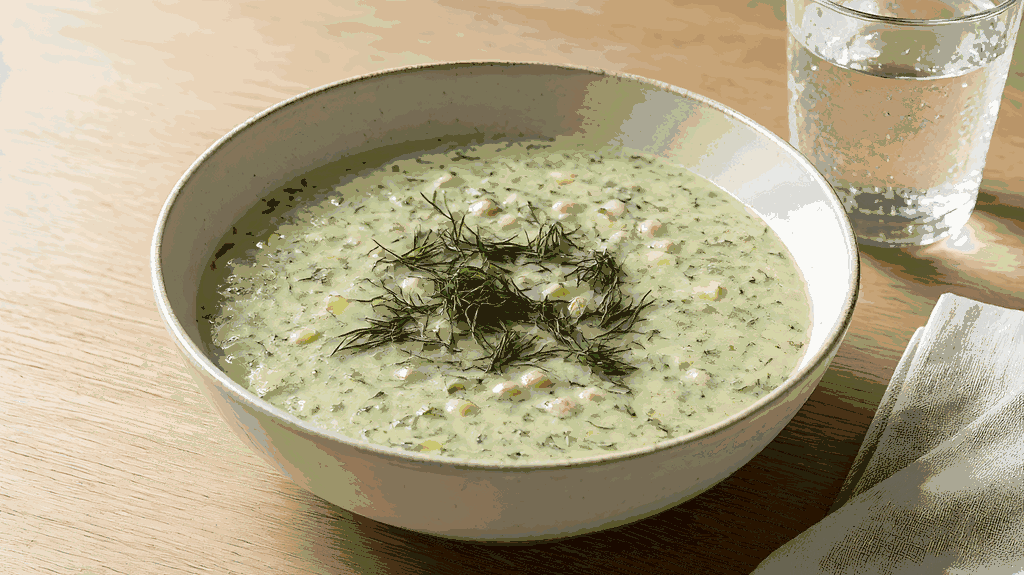
1. Cucumber, white bean, and yogurt soup
Ingredients: 1 can (about 15 ounces) no-salt-added or lower-sodium white beans, drained and rinsed; ¾ cup plain Greek yogurt; 1 medium cucumber, chopped; ½ cup cold water or lower-sodium broth; juice of half a lemon; 2 tablespoons chopped dill or parsley; black pepper. Optional: a few diced cucumber pieces and beans for topping.
Method: Blend the beans, yogurt, cucumber, liquid, lemon, herbs, and pepper until smooth. Add more liquid a tablespoon at a time for a thinner texture. Chill for 15–30 minutes if you prefer it colder, then top with the reserved cucumber and beans. For a dairy-free alternative, substitute soft tofu or unsweetened soy yogurt; check the label because protein differs among products.
Why it works: The beans and yogurt provide complementary sources of protein, and the cucumber makes the soup fresh and mild. If the bean flavor feels too strong, blend in more cucumber or lemon. If the soup is too tart, use less lemon rather than adding sweetener.
2. Tomato, cottage cheese, and basil soup
Ingredients: 1 cup low-fat cottage cheese; 1½ cups no-salt-added canned crushed tomatoes; ½ cup cold water; ½ teaspoon dried basil or a small handful of fresh basil; black pepper; optional garlic powder and a teaspoon of olive oil.
Method: Blend until creamy. Taste before adding salt because cottage cheese and canned tomatoes may already contribute sodium. For a smoother texture, blend longer; for a chunky bowl, reserve a few spoonfuls of tomatoes and stir them in. Add water gradually until the consistency is right. Serve cold or at room temperature; if you prefer hot tomato soup, warm it after blending rather than assuming the blender makes it hot.
Swaps: Use plain Greek yogurt instead of cottage cheese, or blend in a few rinsed cannellini beans for a dairy-free version. Add chopped roasted red peppers for sweetness and color. Keep highly seasoned toppings separate so each person can adjust their own bowl.
3. Green edamame, spinach, and tofu soup
Ingredients: 1 cup thawed shelled edamame; ½ block soft or silken tofu (about 7 ounces); 1 packed cup baby spinach; ¾ cup cold water or lower-sodium vegetable broth; juice of half a lime; cilantro or mint; optional ginger and a small spoonful of sesame seeds.
Method: Blend the edamame, tofu, spinach, liquid, lime, and herbs until smooth. Add extra liquid only after checking the thickness. If you want a more textured soup, reserve a little edamame to stir in. For a milder flavor, use parsley and lemon instead of cilantro and lime. For a soy-free option, replace the tofu and edamame with rinsed white beans and Greek yogurt, if dairy is suitable for you.
Texture note: Edamame can leave a slightly grainy finish. A high-speed blender and longer blending help; alternatively, strain the soup or serve it as a thick dip with vegetables. There is no need to force a smooth soup if a chunky texture is easier to enjoy.
Chunky soups and other no-blender options
No blender does not mean no soup. Mash rinsed beans with a fork, then stir them into plain yogurt thinned with water, lemon, herbs, and chopped cucumber. For a tuna-and-white-bean bowl, combine canned tuna, beans, diced tomato, celery, and lemon; add broth only if you want a spoonable consistency. For a quick chicken soup, mix refrigerated ready-to-eat cooked chicken with canned tomatoes, corn, black beans, salsa, and a little broth. These options are closer to a chilled stew or a soup-salad hybrid, but they satisfy the same low-prep goal.
If you need a shelf-stable lunch, keep unopened cans and shelf-stable cartons in a cool, dry place, then refrigerate perishable ingredients after opening. If there is no refrigerator, choose unopened shelf-stable components and assemble only what you will eat. Do not leave dairy, cooked meat, tofu, or opened canned food sitting out for an extended period.
Making the soup lower in calories without making it unsatisfying
“Low calorie” is relative to the rest of a meal and to a person’s needs. Rather than chasing the lowest number, decide what role the soup should play. If it is a light starter, a smaller amount may be enough. If it is the main meal, include a meaningful protein source and consider a side such as toast, fruit, or crackers. Use broth, water, tomatoes, or cucumber to adjust volume, and measure calorie-dense add-ins like oil, cheese, seeds, and avocado only if tracking is useful to you. These ingredients can fit; their portion simply changes the energy content quickly.
To increase protein without dramatically changing the bowl, choose a higher-protein yogurt, add tofu or beans, or stir in a portion of cooked poultry or fish. Compare labels because products vary. Protein needs are individual, and a high-protein meal is not automatically appropriate for everyone. If you have kidney disease or another condition affecting diet, ask your clinician or registered dietitian what level is right for you.
Adapting meals for appetite changes or GLP-1 treatment
Some people using GLP-1 medicines notice changes in appetite or digestion, but experiences differ. A cool soup may feel convenient to one person and unpleasant to another. Start with a few spoonfuls if you are uncertain about tolerance, eat slowly, and stop if uncomfortable. You can make the soup thicker, milder, or less acidic, or choose a different food entirely. Do not use this article to change medicine, dosing, or medical care. The FDA prescribing information for semaglutide describes delayed gastric emptying and gastrointestinal adverse reactions; ask your prescriber or pharmacist how your own medicine and symptoms should guide food choices. Read the FDA prescribing information.
Seek medical guidance for persistent or severe symptoms, difficulty keeping fluids down, or concerns about nutrition. This article cannot tell whether a symptom is caused by medication or another condition. If you are recovering from surgery, have swallowing difficulties, food allergies, diabetes, or a medically prescribed diet, get individualized advice before relying on these recipes.
Prep, storage, and food safety
For the best texture, blend only the amount you expect to eat soon, or store the base without delicate toppings. Put leftovers into a clean, covered, shallow container and refrigerate promptly. FoodSafety.gov lists refrigerated soups and stews with vegetables or meat at 3–4 days; follow the specific storage instructions for your ingredients and discard food that has been left out too long or appears spoiled. See the FoodSafety.gov cold-storage chart. If the soup contains dairy, tofu, opened canned foods, or cooked meat, keep it cold during transport and return it to refrigeration promptly.
For meal prep, keep crunchy toppings in a separate container and add them just before eating. Acid and salt can change flavor as the soup sits, so season lightly before storing and adjust after chilling. If a chilled soup separates, stir or briefly re-blend it. Freezing can change the texture of yogurt or cottage cheese; test a small portion first, or freeze a bean-and-tomato base and add dairy after thawing.
Common problems and easy fixes
- Too thick: Add cold water, broth, or unsweetened milk one tablespoon at a time.
- Too thin: Blend in more beans, tofu, cottage cheese, or drained vegetables.
- Too salty: Add an unsalted ingredient or more cucumber/tomato; avoid trying to mask salt with sugar.
- Too bland: Add lemon, vinegar, fresh herbs, pepper, garlic, or spice before adding salt.
- Gritty: Blend longer, strain, or embrace a chunky version with reserved vegetables.
- Not filling enough: Increase the protein anchor or pair the soup with a side that suits your appetite.
Frequently asked questions
Can a no-cook soup really be high in protein?
It can be, depending on the ingredients and serving size. Yogurt, cottage cheese, tofu, edamame, beans, fish, and cooked poultry contribute protein in different amounts. Check the package labels rather than assuming every soup has the same amount.
Are canned beans ready to use?
Most canned beans are cooked and can be eaten after draining and rinsing. Follow the package instructions, and refrigerate unused portions in a covered container rather than storing them in an opened can.
Can I make these soups vegan?
Yes. Use soy yogurt, soft tofu, edamame, beans, or a combination. Unsweetened soy products often differ from coconut-based alternatives in protein, so check labels if that matters to your meal.
Can I use protein powder?
You can, but it is optional. Some powders thicken, clump, or add sweetness that clashes with savory soup. Blend a small amount first, check the product’s ingredients for allergens, and do not treat a supplement as necessary for a balanced meal.
Will soup cause weight loss?
No single recipe guarantees weight change. A soup may help someone assemble a meal they enjoy, but overall patterns, individual needs, and health context matter. Avoid using the recipes as a substitute for professional nutrition care.
Is chilled soup safe to take to work?
It is perishable. Carry it in an insulated lunch bag with a cold source and refrigerate it when you arrive. If you cannot keep it cold, choose a shelf-stable meal instead.
Conclusion
No-cook high-protein low-calorie soups are a flexible assembly method: combine a ready-to-eat protein anchor with vegetables, herbs, and just enough liquid to create the texture you like. Try one recipe, adjust it to your taste and appetite, and keep food-safety and medical boundaries in view. The best version is one that is practical, enjoyable, and appropriate for your own circumstances—not the one with the most restrictive ingredient list.