
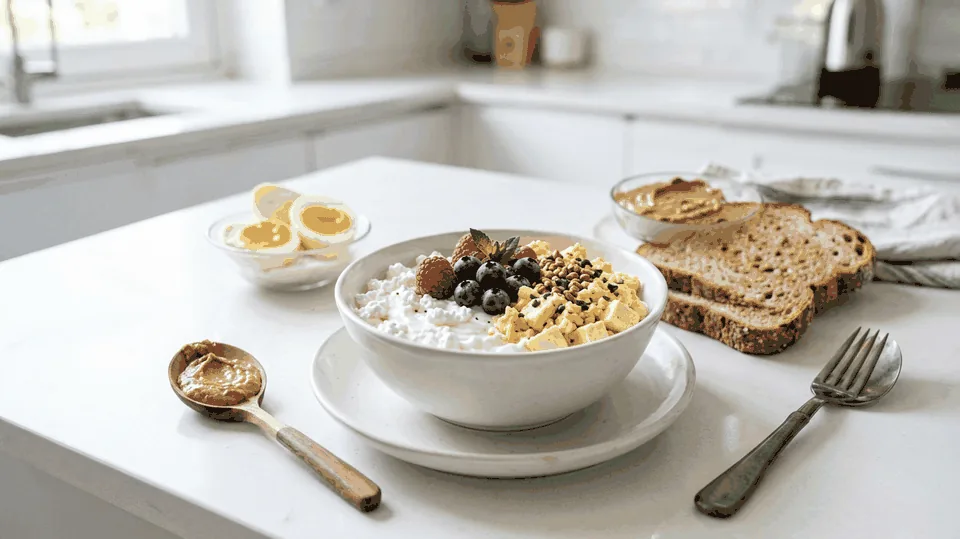
Eggs are convenient, but they are not required for a high-protein breakfast. If you avoid eggs because of taste, allergy, preference, cost, or simple boredom, you can still build a satisfying morning meal with yogurt, cottage cheese, tofu, beans, fish, lean meat, or a protein-fortified option.
This guide focuses on practical high-protein breakfast without eggs ideas for weight management. Protein needs vary by body size, age, activity, medical history, and goals, so use these ideas as a flexible starting point rather than a personal prescription.
What makes a useful high-protein breakfast?
A useful breakfast does more than reach a protein number. It should be realistic to prepare, enjoyable enough to repeat, and appropriate for your appetite and schedule. A balanced morning meal often combines a protein anchor with fruit or vegetables, a source of fiber, and an optional carbohydrate or fat that helps the meal feel satisfying.
For many adults, a breakfast in the 20-to-30-gram protein range is a practical recipe format, not a universal requirement. Someone with a small appetite may prefer a smaller portion and a later snack. Someone who trains early may need more energy. If you have kidney disease or another condition that affects protein intake, ask your clinician for individualized guidance.
Greek yogurt breakfast ideas
Plain Greek yogurt is an easy protein anchor. Choose a variety that fits your preferences, then add texture and flavor without turning breakfast into a complicated recipe.
- Greek yogurt, berries, oats, and chia seeds.
- Greek yogurt with sliced pear, cinnamon, and chopped walnuts.
- A savory yogurt bowl with cucumber, herbs, olive oil, and whole-grain toast.
- Greek yogurt blended with berries and milk for a drinkable breakfast.
- Yogurt layered with cottage cheese, fruit, and a small portion of granola.
Check labels for added sugar and serving size, but do not assume that every sweetened product is automatically a problem. The best choice is one you can fit into your overall routine.
Cottage cheese and ricotta combinations
Cottage cheese works in both sweet and savory meals. It can be eaten with fruit, spread on toast, mixed into oatmeal, or blended into a smooth dip. Ricotta can add protein and creaminess to toast, fruit bowls, or a small whole-grain pancake.
- Cottage cheese with peaches, cinnamon, and pumpkin seeds.
- Cottage cheese on toast with tomatoes, black pepper, and greens.
- Whipped cottage cheese with berries and cocoa powder.
- Ricotta with berries and a drizzle of nut butter.
- Cottage cheese mixed with tuna or salmon for a savory toast topping.
Tofu and plant-based egg-free breakfasts
Tofu can replace the texture of scrambled eggs without pretending to be an egg. Crumble firm tofu into a pan with spinach, mushrooms, peppers, and herbs. Serve it with beans, avocado, or a small tortilla depending on your energy needs.
Other plant-based protein anchors include soy yogurt, edamame, lentil patties, beans, and unsweetened soy milk. If you use a plant protein powder, review the ingredient list and choose a product that fits your dietary needs. Some powders contain sugar alcohols or ingredients that may cause digestive discomfort.
Fish, chicken, and leftovers for breakfast
Breakfast does not have to taste sweet. Leftover salmon, chicken, turkey, or lentils can become a quick morning bowl. Pair a small serving of protein with vegetables, potatoes, rice, or toast. This approach is especially useful for people who do not enjoy traditional breakfast foods.
- Smoked salmon with cottage cheese, cucumber, and toast.
- Leftover chicken with roasted vegetables and a small potato.
- Tuna mixed with Greek yogurt, served with whole-grain crackers and fruit.
- Black beans with avocado, salsa, and a small corn tortilla.
High-protein breakfast meal prep
Meal prep works best when it reduces decisions without making every morning identical. Prepare two protein anchors and two flavor combinations for the week. For example, keep yogurt and cottage cheese available, then alternate fruit bowls, savory toast, and blended breakfasts.
- Choose two breakfasts that take less than ten minutes.
- Prepare washed fruit and portioned toppings.
- Keep shelf-stable options such as soy milk or tuna for busy mornings.
- Use leftovers within the food-safety window recommended in your area.
- Make the next breakfast visible before going to bed.
If your appetite is low in the morning, split breakfast into two smaller eating occasions. A yogurt bowl now and a protein snack later may be more comfortable than forcing one large meal.
How to keep breakfast lower in calories without feeling small
Use high-volume produce, fruit, broth-based foods, and unsweetened beverages to add satisfaction without relying only on calorie-dense toppings. Measure calorie-dense ingredients such as nuts, oils, granola, cheese, and nut butter when you are learning portions. You do not need to remove them; you simply want them to match the meal’s purpose.
Frequently asked questions
What is the best egg-free protein breakfast?
There is no single best choice. Greek yogurt, cottage cheese, tofu, beans, fish, chicken, and soy foods can all work. Pick the option that fits your appetite, budget, and dietary preferences.
Can I have a protein shake for breakfast?
A shake can be convenient, especially when appetite is low. Consider adding fruit, oats, yogurt, or another food so the meal is more satisfying, and check with a professional if you have medication or medical conditions that affect nutrition.
How much protein should breakfast contain?
Many recipes use 20 to 30 grams as a practical range, but individual needs differ. A registered dietitian or clinician can help determine a suitable daily target.
Build an egg-free breakfast from a simple formula
Use one protein anchor, one high-fiber or water-rich food, and one optional energy source. For example, pair Greek yogurt with berries and oats; tofu with vegetables and toast; or cottage cheese with fruit and whole-grain crackers. The formula is flexible enough for different cuisines and budgets.
When appetite is small, start with the protein anchor and add the rest as tolerated. When you are active or breakfast is followed by a long gap, include a more substantial carbohydrate such as oats, potatoes, toast, beans, or fruit.
Eight practical combinations
- Greek yogurt, blueberries, oats, and cinnamon.
- Cottage cheese, pear, pumpkin seeds, and whole-grain toast.
- Tofu with mushrooms, spinach, salsa, and a corn tortilla.
- Smoked salmon, cucumber, cottage cheese, and rye toast.
- Black beans, avocado, tomatoes, and a small baked potato.
- Unsweetened soy milk blended with yogurt, berries, and oats.
- Leftover chicken, roasted vegetables, and a small portion of rice.
- Whipped cottage cheese with cocoa, strawberries, and a small banana.
These are starting combinations, not fixed prescriptions. Adjust salt, dairy, gluten, nuts, and portion size for your preferences and medical needs.
Adapting breakfast for common dietary preferences
For dairy-free eating, use fortified soy yogurt, unsweetened soy milk, tofu, beans, or a suitable protein powder. For vegetarian eating, combine dairy, tofu, tempeh, beans, lentils, or edamame. For gluten-free eating, choose certified gluten-free oats, potatoes, rice, corn tortillas, or gluten-free toast.
If you avoid nuts, use seeds only if tolerated and check labels for cross-contact. If you need a low-fiber or medically restricted diet, do not assume that a general high-protein plan is appropriate. Ask a qualified professional to adapt the breakfast structure.
Prep breakfast in two short sessions
Instead of preparing seven identical meals, use two preparation sessions. On the first day, wash fruit, portion yogurt toppings, and cook tofu or beans. Midweek, refresh produce and prepare another savory option. Keep the protein foods separate from toppings so texture stays pleasant.
Make a backup list for rushed mornings: yogurt, soy milk, cottage cheese, fruit, a ready-to-eat protein portion, and whole-grain crackers. A practical backup is more valuable than an ideal recipe that requires equipment you do not have.
When breakfast is not appealing
Some people are not hungry early, especially when using appetite-affecting medication. It may be reasonable to shift breakfast later or divide it into two small portions, but persistent inability to eat or drink should be discussed with your clinician. Do not use a low appetite as a reason to ignore protein, hydration, or other nutrition needs.
Compare labels without overthinking them
When buying yogurt, milk, shakes, or bars, compare serving size, protein, added sugar, saturated fat, sodium, and ingredients that you personally tolerate. A product does not have to be perfect to be useful. Choose the option that fits your budget and can be eaten consistently.
Budget-friendly egg-free protein choices
High-protein breakfasts do not need expensive specialty products. Plain yogurt in a larger container, cottage cheese, dried lentils, canned beans, tofu, milk, soy milk, oats, and frozen fruit can all support affordable meals. Compare the cost per serving rather than the package price alone.
Use leftovers strategically. A small portion of chicken, beans, tofu, or fish from dinner can become breakfast with toast, potatoes, rice, or vegetables. This reduces food waste and makes an egg-free breakfast easier on busy mornings.
Make the breakfast family-friendly
Serve the same base foods with different toppings. One person can use berries and cinnamon, another can choose tomatoes and herbs, and a child can add toast or fruit. This reduces the pressure to cook separate meals while respecting different preferences.
A family breakfast does not need identical portions. Children, active adults, and people with medical nutrition needs may require different amounts. Avoid presenting one calorie target as appropriate for everyone.
Create a two-week breakfast rotation
Choose four breakfasts and repeat each twice during a two-week period. For example: yogurt and berries, tofu and toast, cottage cheese and fruit, and a leftover protein bowl. Write the ingredients on one shopping list and prepare only the components that save time.
After two weeks, keep the meals that were easy to eat and remove the ones that created stress or waste. This is a better test of a breakfast plan than choosing the most impressive recipe online.
When a packaged breakfast is useful
A ready-to-drink shake, yogurt cup, cottage cheese, or protein bar may be useful when there is no time to cook. Read the serving size and ingredients, and consider whether the product keeps you satisfied. Packaged food can be part of a balanced routine; convenience does not make it inferior.
Match the portion to your morning
A high-protein breakfast can be small, moderate, or substantial. If you eat again soon, yogurt and fruit may be enough. If lunch is late, add oats, toast, potatoes, beans, or another carbohydrate. If you are recovering from exercise or have higher needs, an individualized plan may include a larger meal.
Protein is one part of the day, not a competition between breakfast recipes. A consistent pattern across meals is usually more useful than trying to make one breakfast carry the entire nutrition plan.
A short shopping list
Keep plain yogurt, cottage cheese, tofu, soy milk, beans, oats, fruit, whole-grain toast, frozen vegetables, and one convenient backup protein on hand. With these foods, you can create sweet, savory, hot, or cold breakfasts without buying a new product every week.
Key takeaways for egg-free mornings
Start with foods you already like, then add variety slowly. Greek yogurt, cottage cheese, tofu, beans, fish, chicken, soy foods, and leftovers can all become useful protein anchors. Add fruit, vegetables, oats, toast, or potatoes based on hunger and schedule.
The best breakfast is the one you can prepare, enjoy, tolerate, and repeat. It does not need to look like a perfect social-media meal.
Keep the plan repeatable
Rotate familiar breakfasts and make one small improvement at a time. A meal that is easy, affordable, and tolerated is more valuable than a complicated recipe that cannot fit your mornings.
On especially busy days, keep the decision simple: choose one protein food, one fruit or vegetable, and one convenient carbohydrate. This keeps breakfast useful without requiring a new recipe.
Related SnakeTongue Guides
Use these related guides to build a practical nutrition routine:
- GLP-1 Constipation Foods
- High-Protein Breakfast Without Eggs
- How to Stay Full in a Calorie Deficit
- Weight Loss Plateau on GLP-1
This site provides general education, not individualized medical advice. Discuss medication, symptoms, medical conditions, and major diet changes with your clinician.