
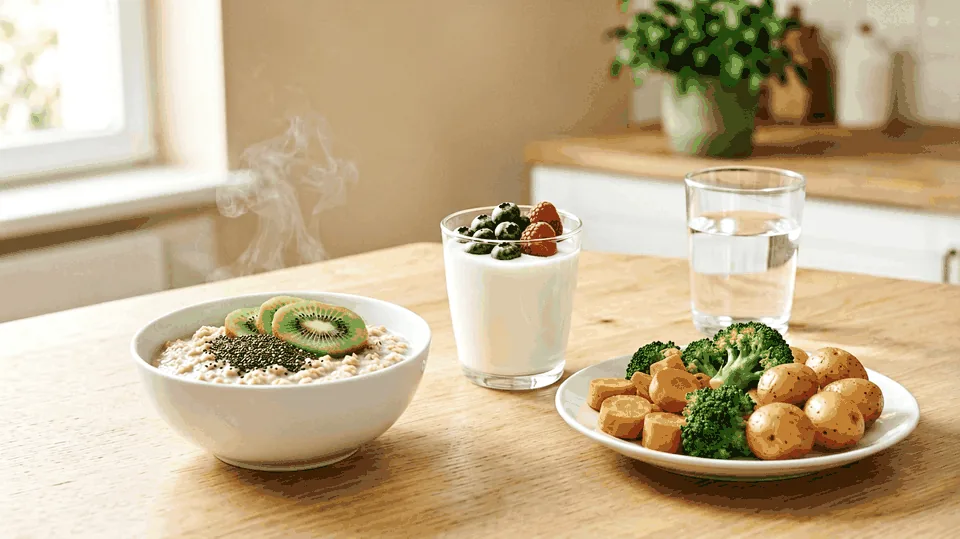
Constipation is a common eating challenge people may notice while using a GLP-1 medication. A smaller appetite, slower digestion, reduced food volume, changes in routine, and lower fluid intake can all make bowel movements less comfortable. Food choices may support a healthier routine, but persistent or severe symptoms deserve medical advice.
This guide focuses on practical GLP-1 constipation foods, gradual fiber, hydration, and gentle meal ideas. It does not diagnose constipation, recommend medication doses, or replace advice from your prescriber.
Why constipation can happen during GLP-1 treatment
GLP-1 medicines affect appetite and digestion. Many people naturally eat smaller meals, snack less, or stop drinking as much because they feel full sooner. If the amount of food and fluid falls quickly, stool may become harder or less frequent. Some people also change their diet toward more protein while unintentionally reducing fruit, vegetables, beans, or whole grains.
Constipation is not simply a sign that you need to eat more fiber immediately. A sudden large increase in fiber without enough fluid can make bloating and discomfort worse. The most useful approach is usually gradual: notice your current pattern, add one manageable source of fiber, drink regularly, and contact your healthcare professional if symptoms continue.
Best fiber-rich foods for GLP-1 users
Fiber comes from plant foods and has different forms. Soluble fiber absorbs water and can create a softer, more formed stool. Insoluble fiber adds bulk and supports regular movement through the digestive tract. Most people benefit from a mix, but tolerance varies.
- Oats: oatmeal or overnight oats can provide a gentle breakfast base.
- Kiwi, berries, pears, and prunes: fruit adds fluid, fiber, and flavor in a small serving.
- Chia or ground flax: a small amount can be added to yogurt or oatmeal; increase slowly.
- Lentils and beans: use a modest portion in soup, a bowl, or a salad if they are tolerated.
- Cooked vegetables: carrots, squash, green beans, spinach, and zucchini may feel gentler than a very large raw salad.
- Whole grains: oats, barley, or a small portion of brown rice can add texture and fiber.
There is no single best food for everyone. Start with one food you already enjoy and observe how your body responds. If you have been advised to follow a special diet, ask your clinician or registered dietitian how these foods fit your plan.
Gentle meal ideas for constipation on GLP-1
When appetite is low, a large high-fiber meal may feel overwhelming. Smaller combinations can be easier to tolerate:
- Greek yogurt with berries, oats, and a small sprinkle of ground flax.
- Warm oatmeal topped with kiwi and a spoonful of yogurt.
- A small lentil soup with cooked carrots and a piece of toast.
- Chicken, tofu, or fish with roasted zucchini and a modest serving of quinoa.
- A smoothie made with yogurt, berries, oats, and water, if liquid meals feel easier.
- Cottage cheese with pear slices and a few whole-grain crackers.
Keep the portion modest at first. Eat slowly and pause before deciding whether you need more. The goal is not to force a large meal; it is to create a repeatable pattern that supplies protein, fluids, and plant foods without worsening discomfort.
Hydration and meal timing matter
Fiber works best as part of a fluid-containing routine. Sip water throughout the day rather than waiting until the evening. Broth-based soups, milk, unsweetened tea, and water-rich fruit can contribute fluid, although water should remain the main beverage for most people.
A simple habit is to drink with each meal and keep a bottle visible between meals. If nausea or early fullness makes drinking difficult, small frequent sips may be more comfortable than a large glass. People with kidney, heart, or other conditions that limit fluids should follow their clinician’s instructions instead of using a generic hydration target.
How to increase fiber gradually
- Write down your usual fiber foods for two or three days.
- Add one small serving of fruit, oats, beans, or cooked vegetables.
- Keep that serving consistent for several days while monitoring comfort.
- Add another source only if the first change is tolerated.
- Pair added fiber with regular fluids and gentle movement if appropriate.
Walking after a meal may help some people maintain a regular routine, but movement is not a substitute for medical care. Avoid making several major diet changes at once; otherwise it becomes difficult to know what helped or caused discomfort.
Foods and habits that may make symptoms harder
There is no universal list of forbidden foods. However, a pattern built mostly from very low-fiber snacks, large amounts of highly processed food, or insufficient fluids may leave less room for foods that support regularity. Very large meals can also feel uncomfortable when appetite and digestion have changed.
Instead of labeling foods as good or bad, look at the overall pattern. Can you add a small fruit serving? Can a meal include cooked vegetables? Can you sip fluids earlier in the day? These small questions are usually more practical than trying to follow a rigid constipation diet.
When to contact a healthcare professional
Contact your prescriber or another qualified healthcare professional if constipation is persistent, worsening, painful, or interfering with eating and drinking. Seek urgent medical care for severe or sudden abdominal pain, repeated vomiting, a swollen abdomen, blood in the stool, fainting, fever, or an inability to pass stool or gas. Do not change a medication dose or add a laxative without appropriate professional guidance.
Frequently asked questions
What is the best food for constipation on GLP-1?
There is no single best food. Oats, kiwi, berries, cooked vegetables, beans, and whole grains are common options, but tolerance differs. Start with a small serving and increase gradually.
Can I take fiber supplements with a GLP-1 medication?
Ask your clinician or pharmacist first. A supplement may not be appropriate for everyone, and the timing of supplements or other medicines can matter.
Should I avoid protein when constipated?
Protein is still important for maintaining strength and meeting nutrition needs. Pair protein foods with tolerated plant foods and fluids rather than removing protein completely.
How quickly should food changes work?
It varies. If symptoms are persistent or severe, do not wait for diet changes alone to solve the problem; contact your healthcare professional.
A gentle one-day meal rhythm
A sample day can help turn general advice into something usable. The goal is not to copy a rigid menu but to see how small portions, fluids, protein, and plant foods can fit together.
- Morning: oatmeal with yogurt, berries, and a small amount of chia, plus water or tea.
- Midday: a small bowl of lentil soup with cooked carrots and toast.
- Afternoon: pear slices with cottage cheese, or a yogurt drink if chewing feels difficult.
- Evening: fish, tofu, or chicken with roasted zucchini and a modest portion of quinoa.
- Between meals: sip fluids consistently instead of trying to catch up at night.
If these portions feel too large, divide them into smaller eating occasions. If you are not able to maintain adequate intake, contact your healthcare professional rather than forcing a fiber increase.
Raw versus cooked produce
People often assume that a large raw salad is the best constipation food. It can be useful, but it is not the only choice. Cooked vegetables, blended soups, stewed fruit, oatmeal, and peeled produce may be easier to tolerate when appetite is low or digestion feels sensitive.
Try changing one variable at a time. For example, replace a large raw salad with a cup of cooked zucchini for several days. If comfort improves, keep that approach. If symptoms become worse, stop the change and ask for professional guidance.
Simple preparation for low-appetite days
Keep a few low-effort foods available: single-serve yogurt, washed berries, microwaveable oats, pre-cooked vegetables, broth, canned beans, and a protein food you tolerate. Portion foods into small containers so eating does not require a large cooking project.
Food safety still matters. Refrigerate leftovers promptly, follow package instructions, and discard food that has been stored too long or smells unusual. Constipation is uncomfortable, but foodborne illness can create additional digestive symptoms.
Questions to bring to your clinician
- How long should I monitor constipation before contacting the office?
- Are my current medicines, supplements, or medical conditions relevant?
- Is a fiber supplement appropriate for me?
- Do I have any fluid limits or foods I should avoid?
- Which symptoms would require urgent care?
Bring a short record of bowel movement changes, food and fluid intake, pain, nausea, vomiting, and any products you have taken. This information can help a clinician give more specific advice.
A practical decision tree for the next meal
If your appetite is low but you can eat, choose a small meal with protein and a tolerated plant food. If fiber causes bloating, reduce the portion and try cooked produce or oats instead. If drinking feels difficult, take small sips and ask your clinician whether any fluid limits apply. If you have severe pain, vomiting, swelling, blood, fever, or cannot pass stool or gas, seek urgent medical care rather than trying another food.
This decision tree keeps the focus on safety and tolerance. It is not a substitute for a diagnosis, and it should not be used to delay a conversation with your care team.
Keep a short food and symptom journal
For three days, note approximate meals, fluids, fiber foods, bowel movement changes, nausea, pain, and any products you take. You do not need to weigh every ingredient. The purpose is to identify patterns such as “symptoms appear after a very large meal” or “fluids are lowest on workdays.”
Share the journal with your clinician if symptoms continue. It may help distinguish food tolerance issues from medication, hydration, or another medical concern.
Adjust the routine as treatment changes
Nutrition needs can change as a person starts, changes, pauses, or stops a medication. A food that felt comfortable one week may feel too heavy during a period of nausea. Keep the basic framework—small portions, regular fluids, tolerated fiber, and adequate protein—but allow the specific foods and portion sizes to change.
Do not use online meal plans to make medication decisions. Treatment changes should be handled by the prescribing professional, especially when symptoms affect eating, hydration, or daily function.
If food changes do not help
Food can support a routine, but constipation may have causes that food alone cannot solve. If symptoms continue despite reasonable fluids and tolerated meals, contact your prescriber. Mention any iron, calcium, pain, allergy, or other products because supplements and medicines can affect digestion.
Do not keep increasing fiber indefinitely while ignoring pain, vomiting, dehydration, or an inability to eat. More is not always better, and urgent symptoms need medical assessment.
Use supplements carefully
Fiber powders, herbal products, and laxatives are not automatically safe for everyone. Ask a pharmacist or clinician about ingredients, timing, interactions, and whether a product is suitable for your medical history. Keep the package available when asking for advice.
Key takeaways for a gentler routine
Choose one tolerated fiber food, one reliable protein, and one fluid habit to practice first. A small, repeatable change is more useful than a large list that becomes difficult to follow. Keep the plan flexible for appetite, travel, work, and symptoms.
Review the pattern with a clinician if constipation continues, changes suddenly, or affects hydration and food intake. Your safety matters more than completing an online checklist.
Keep the plan practical
Choose foods that are available in your normal grocery routine. A simple bowl of oats, yogurt, fruit, and water may be more useful than a complicated recipe that you make once. Track comfort, not perfection, and ask for help when symptoms do not improve.
Related SnakeTongue Guides
Use these related guides to build a practical nutrition routine:
- GLP-1 Constipation Foods
- High-Protein Breakfast Without Eggs
- How to Stay Full in a Calorie Deficit
- Weight Loss Plateau on GLP-1
This site provides general education, not individualized medical advice. Discuss medication, symptoms, medical conditions, and major diet changes with your clinician.