
Protein-rich high-fiber bowls can make vegan weight-management meals more satisfying, practical, and flexible. This guide shows how to combine legumes, soy foods, grains, vegetables, fruit, and seeds into balanced bowls, plus a few wrap and dessert ideas for days when you want variety.
Quick answer: The most useful vegan bowls do not rely on one "superfood." They combine a meaningful protein anchor, a fiber-rich carbohydrate or legume, plenty of colorful vegetables, a measured fat source, and a flavorful sauce. That combination can help a meal feel substantial without making extreme promises about appetite or weight loss. The portions below are starting points, not medical prescriptions, and the nutrition numbers are estimates that vary by brand and preparation.
For context, MyPlate lists beans, peas, lentils, nuts, seeds, soy foods, and tempeh among vegetarian protein choices. NIDDK also emphasizes that a healthy eating pattern should be practical enough to maintain over time. This article applies those principles to everyday vegan bowls and related high-fiber meals.
What makes a vegan bowl high in protein and fiber
A bowl becomes more useful for weight management when each component has a job. Protein can come from tofu, tempeh, edamame, lentils, beans, seitan, or a fortified soy product. Fiber often comes from beans, lentils, vegetables, fruit, oats, barley, quinoa, chia, flax, or whole-grain wraps. Healthy fats such as tahini, avocado, walnuts, or pumpkin seeds add flavor and help a meal feel complete, but they are energy-dense, so a spoonful or small measured portion is usually enough.
The five-part bowl formula
- Protein anchor: Start with about 3/4 to 1 cup of beans or lentils, 4 to 6 ounces of tofu or tempeh, or a combination of soy and legumes.
- High-fiber base: Use greens, roasted vegetables, barley, quinoa, brown rice, or a small serving of another whole-food carbohydrate.
- Color and crunch: Add two or three vegetables such as cabbage, peppers, broccoli, carrots, tomatoes, cucumber, or greens.
- Measured fat: Try one tablespoon of tahini, a quarter avocado, or one to two tablespoons of seeds.
- Acid and flavor: Lemon, lime, vinegar, herbs, spices, salsa, or a low-sugar dressing makes the bowl enjoyable enough to repeat.
This structure is more dependable than building a meal around vegetables alone. A very large salad may look filling but leave you searching for snacks if it has little protein or carbohydrate. On the other hand, a bowl can become calorie-dense when it includes large portions of grains, nuts, avocado, and dressing without enough vegetables. The formula helps you adjust one component at a time.
How to build protein-rich high-fiber bowls for vegans
Think in combinations rather than rigid recipes. The same ingredients can become several different meals by changing the seasoning and sauce. This approach is especially helpful for busy adults who want meal prep without eating identical food every day.
1. Choose a protein anchor first
Tofu and tempeh are convenient because they cook quickly and work with many flavor profiles. Extra-firm tofu can be baked, air-fried, or pan-seared. Tempeh has a firmer texture and a nutty flavor; steaming it briefly before seasoning can soften its bitterness. Lentils and beans are inexpensive, shelf-stable, and naturally fiber-rich. Edamame adds a useful combination of protein and fiber to a bowl, while seitan can provide substantial protein for people who tolerate gluten.
For a more complete meal, pair two modest sources. For example, combine black beans with edamame, lentils with tofu, or chickpeas with a fortified soy yogurt dressing. You do not need to combine proteins at the same bite or calculate amino acids for every meal; variety across the day matters more for most people. Anyone with kidney disease or another condition that affects protein or mineral needs should ask a qualified clinician for individualized guidance.
2. Add fiber gradually and keep fluids in mind
Beans, lentils, cruciferous vegetables, chia, and flax can all increase fiber quickly. If your current intake is low, increase portions gradually rather than jumping from very little fiber to several large servings in one day. Drink fluids regularly, and notice how your body responds. Bloating is often a sign that the pace, portion, preparation method, or ingredient combination needs adjusting-not that high-fiber foods are automatically a problem.
Rinsing canned beans, choosing well-cooked lentils, and spreading fiber across meals may make bowls easier to tolerate. If you have persistent abdominal pain, vomiting, severe constipation, blood in the stool, or unexplained weight change, seek medical advice instead of trying to solve the issue with more fiber.
3. Use vegetables for volume and contrast
Roasted vegetables bring sweetness and texture, while raw cabbage, cucumber, radish, and greens add crunch. A simple target is to fill roughly half the bowl with non-starchy vegetables, then adjust based on your energy needs, activity, preferences, and medical guidance. Frozen vegetables are perfectly practical and often reduce food waste. A bag of frozen broccoli, shelled edamame, and mixed peppers can become the backbone of several high-protein meals.
4. Finish with a sauce you can measure
Sauces are where a nutritious bowl can quietly become heavy. Make a batch, then portion it with a tablespoon or small container. Try lemon-tahini sauce, salsa with lime, peanut-lime dressing, blended silken tofu with herbs, or a miso-ginger sauce. You can dilute thicker sauces with water, lemon juice, or unsweetened soy milk without losing much flavor.
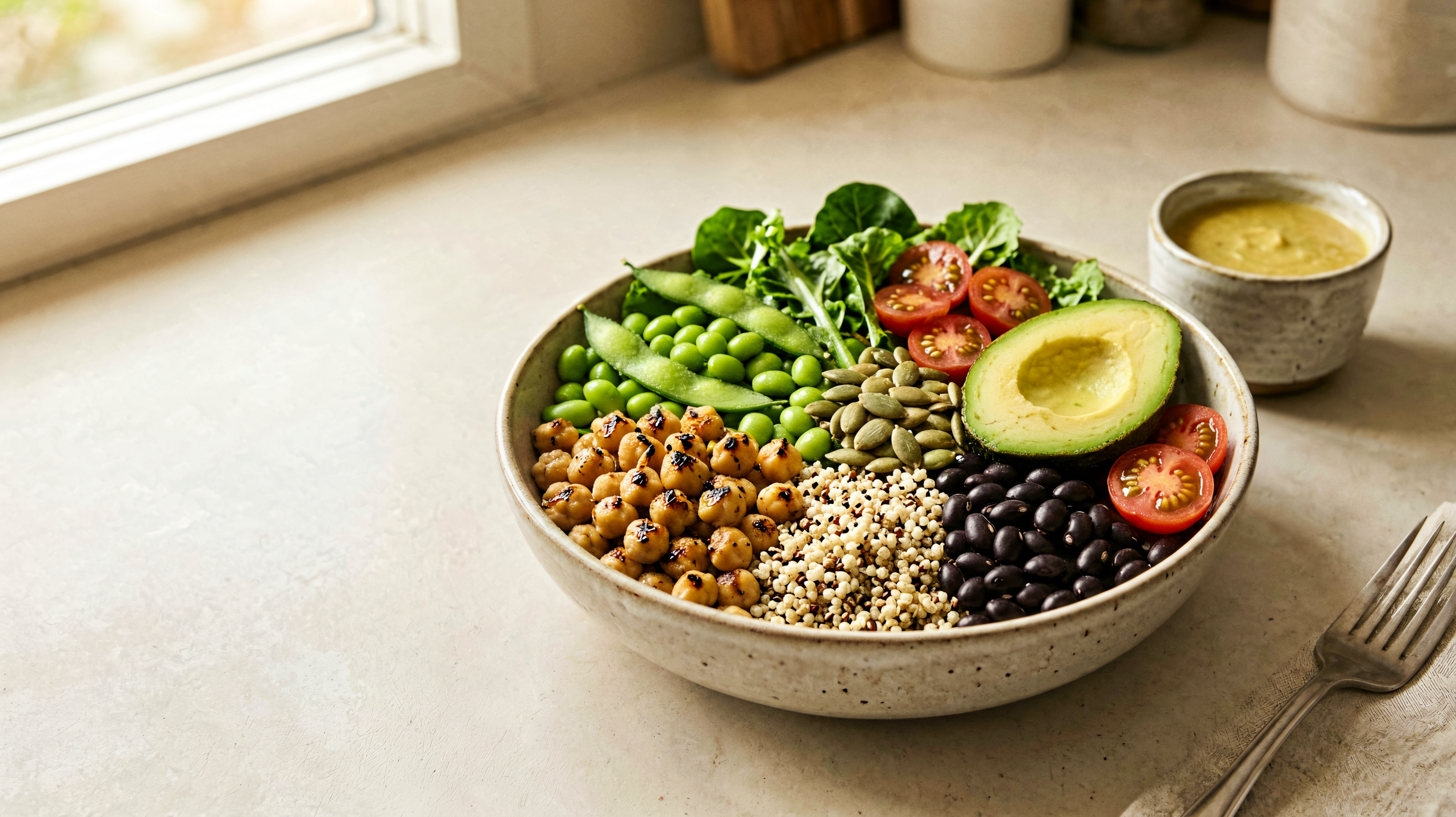
Seven practical vegan bowl combinations
The following combinations are designed as flexible templates. Nutrition estimates are broad because brands, portions, and cooking methods differ. Use the ingredient list as a starting point and check package labels when exact nutrition matters.
1. Lemon-edamame quinoa power bowl
Layer 1/2 cup cooked quinoa, 3/4 cup shelled edamame, chopped cucumber, tomatoes, baby spinach, shredded red cabbage, and one tablespoon pumpkin seeds. Dress with lemon juice, dill, black pepper, and a spoonful of unsweetened soy yogurt. This bowl is bright, meal-prep friendly, and easy to eat cold. For more energy on an active day, add a larger quinoa portion; for a lighter version, increase vegetables and keep the seeds measured.
2. Smoky lentil and sweet potato bowl
Combine 3/4 cup cooked lentils with a small serving of roasted sweet potato, kale, diced red onion, and broccoli. Season with smoked paprika, cumin, garlic, and a squeeze of lime. Add one tablespoon of tahini thinned with water. Lentils contribute both protein and fiber, while sweet potato adds a soft texture that makes the bowl satisfying without needing a large amount of sauce.
3. Ginger tofu crunch bowl
Use baked extra-firm tofu, shredded cabbage, carrots, cucumber, steamed edamame, and a modest serving of brown rice. Mix low-sodium tamari with ginger, rice vinegar, garlic, and lime. Keep the dressing separate if you are preparing several portions. The raw vegetables stay crisp, and the tofu can be reheated while the rest of the bowl remains fresh.
4. Mediterranean chickpea and white bean bowl
Combine chickpeas and white beans with chopped romaine, tomatoes, cucumber, parsley, olives, and a small portion of farro or quinoa. Add lemon, oregano, and one tablespoon of hummus as the dressing. If sodium is a concern, rinse canned beans and use fewer olives. This combination works well in a lunch container and can be turned into a chopped salad the next day.
5. Black bean fajita bowl
Start with black beans, roasted bell peppers, onions, shredded lettuce, tomato salsa, cilantro, and a small scoop of brown rice. Add a few slices of avocado or a spoonful of plain soy yogurt rather than both if you are keeping the bowl lighter. Chili powder, cumin, and lime provide strong flavor without requiring a heavy cheese substitute.
6. Peanut-lime tempeh bowl
Pan-sear tempeh with lime, ginger, and a small amount of peanut-lime sauce. Serve it with broccoli, green beans, shredded cabbage, and buckwheat or quinoa. Peanut sauce is flavorful and energy-dense, so begin with one tablespoon and add more only if needed. This is a useful example of how a measured fat source can improve a meal without becoming the main ingredient.
7. High-fiber breakfast bowl with soy yogurt
For a sweeter option, use unsweetened fortified soy yogurt, oats, chia seeds, ground flax, berries, and a small amount of pumpkin seeds. Add cinnamon and vanilla, then let it sit overnight so the oats and chia soften. Choose unsweetened products when possible and use fruit for flavor. If the bowl is not substantial enough, add a side of tofu scramble or a serving of edamame rather than simply increasing sweeteners.
High-fiber low-calorie wraps for vegetarians and vegans
Bowls are not the only way to use this formula. A high-fiber wrap can be a portable alternative for work, travel, or a quick lunch. Choose a whole-grain or high-fiber tortilla that you enjoy eating, then fill it with a protein anchor, vegetables, and a controlled amount of sauce.
A simple wrap formula
- Protein: mashed lentils, baked tofu strips, black beans, tempeh, or hummus plus edamame.
- Fiber and crunch: shredded cabbage, spinach, peppers, carrots, cucumber, or chopped broccoli.
- Flavor: salsa, mustard, lemon-tahini, or a yogurt-style soy sauce.
- Texture: pickled onions, herbs, pumpkin seeds, or a small amount of avocado.
For a vegetarian version that includes dairy, Greek yogurt can be used in a dressing; for a vegan version, choose unsweetened soy yogurt or blended silken tofu. Avoid overfilling the wrap. A smaller, well-balanced wrap with a side of fruit or vegetables may be easier to eat than one oversized wrap that falls apart.
Protein-rich high-fiber desserts for vegans
Dessert does not need to be treated as a reward or forbidden food. A protein-rich high-fiber dessert can be a planned option, but it is still a dessert-not a replacement for every meal. The goal is to create something enjoyable with ingredients that offer more nutrition than a highly sweetened snack.
Three easy ideas
- Chocolate tofu chia pudding: Blend silken tofu with unsweetened soy milk, cocoa powder, chia seeds, vanilla, and a small amount of maple syrup or mashed banana. Chill until thick.
- Berry soy-yogurt crunch: Layer unsweetened fortified soy yogurt, berries, ground flax, and a measured tablespoon of pumpkin seeds. Add cinnamon or lemon zest for extra flavor.
- Frozen banana-edamame smoothie bowl: Blend a small frozen banana with unsweetened soy milk and a modest serving of shelled edamame, then top with berries and hemp hearts. Keep the fruit portion appropriate for your preferences and needs.
Read labels for added sugar, fiber, and protein. "Plant-based" does not automatically mean low calorie or high protein, and a vegan protein dessert can still be easy to overeat if it is served directly from a large container. Portion it before sitting down to eat.
Meal prep: make bowls easier to repeat
A practical prep session can take less time when you cook components instead of finished bowls. Prepare one protein, one grain or starchy vegetable, two vegetables, and one sauce. Store wet ingredients separately and assemble just before eating when possible.
A 60-minute prep workflow
- Start quinoa, brown rice, barley, or lentils on the stove.
- Press and season tofu or tempeh, then roast it with a tray of vegetables.
- Wash greens and chop raw vegetables while the oven is working.
- Whisk one sauce and portion it into small containers.
- Cool cooked food promptly and refrigerate it in shallow containers.
- Build two or three bowls for the next days and freeze extra components if appropriate.
Use food-safety guidance for cooling, refrigeration, and reheating. If a prepared ingredient looks, smells, or tastes questionable, discard it. Meal prep should reduce decision fatigue, not encourage you to keep food longer than is safe.
How to adjust bowls for different goals
There is no single ideal bowl size. A person with a physically demanding job may need more carbohydrate or total food than someone who is sedentary. Hunger, training, medication effects, allergies, digestive comfort, and personal preferences all matter.
- Need more protein Increase tofu, tempeh, edamame, lentils, or a fortified soy food before adding more seeds or sauce.
- Need more volume Add leafy greens, cabbage, cucumber, zucchini, mushrooms, or roasted non-starchy vegetables.
- Need more energy Add a larger portion of quinoa, barley, sweet potato, beans, avocado, or seeds.
- Need less energy Keep the protein anchor, increase vegetables, and measure calorie-dense sauces, nuts, seeds, and oils.
- Need a gentler meal Choose well-cooked vegetables, smaller portions, and less spice; increase fiber at a pace that feels comfortable.
If you take a GLP-1 medication, have diabetes, are pregnant or breastfeeding, have kidney disease, or have a history of an eating disorder, use general meal ideas only as a starting point and ask your healthcare team for individualized advice. Do not change medication or treatment based on a recipe article.
Common mistakes to avoid
Building a bowl from vegetables alone
Vegetables are important, but a bowl with no meaningful protein or carbohydrate may not satisfy you for long. Add beans, lentils, tofu, tempeh, or edamame and see whether the meal feels more complete.
Assuming every vegan product is high in protein
Some plant-based products are primarily refined starch or added oil. Read the Nutrition Facts label and ingredient list. Compare products by the serving you realistically eat, not only by the marketing claim on the front.
Adding too many calorie-dense toppings
Avocado, nuts, seeds, tahini, oil, and creamy dressings can all fit, but using generous portions of several at once can change the meal quickly. Pick one or two and measure them while you are learning your preferred portions.
Increasing fiber too quickly
More fiber is not always better immediately. Increase it gradually, drink fluids regularly, and adjust ingredients if you experience persistent discomfort. Medical symptoms need medical assessment.
Frequently asked questions
Can vegan bowls provide enough protein
Yes, many people can meet their protein needs with a varied pattern that includes beans, lentils, soy foods, peas, nuts, and seeds. The appropriate amount depends on your body, activity, health status, and total diet. If you are unsure, a registered dietitian can help you build a personalized plan.
Are high-fiber bowls good for weight loss
They can fit a sustainable weight-management pattern because they combine nutrient-dense foods and flexible portions. No single bowl causes weight loss, and the result depends on the overall pattern, energy intake, activity, sleep, medications, and health conditions.
What is the best vegan protein for a bowl
There is no universal winner. Tofu, tempeh, edamame, lentils, beans, and seitan each offer different textures and nutrients. Choose the options you digest well and can afford and prepare consistently.
Can I make these bowls gluten-free
Yes. Use rice, quinoa, potatoes, corn tortillas, or certified gluten-free oats instead of seitan, farro, or wheat-based wraps. Check sauces and packaged ingredients for cross-contact and gluten-containing additives if you need strict avoidance.
How can I keep a bowl from becoming boring
Keep the base formula and change the flavor direction: Mediterranean lemon-herb, smoky fajita, ginger-lime, peanut-lime, or curry. Changing the sauce and herbs often creates more variety than buying completely different ingredients.
The takeaway
Protein-rich high-fiber bowls for vegans are less about finding one perfect recipe and more about using a repeatable structure. Start with tofu, tempeh, beans, lentils, or edamame; add vegetables and a fiber-rich base; measure calorie-dense toppings; and season the bowl well. Use wraps and plant-based desserts as flexible extensions of the same approach.
Build meals that you can enjoy, afford, digest, and repeat. That practical standard is more useful than chasing extreme restrictions or promising that one ingredient will solve weight management. For personal nutrition targets or medical concerns, speak with a qualified healthcare professional.
Further reading: MyPlate Protein Foods and NIDDK: Eating and Physical Activity to Lose or Maintain Weight.